
Describe the symptom, not the part
A key may be difficult to insert, may stop turning or may turn without releasing the door. A handle may feel loose even though the key still works. Describe each symptom separately. If something broke suddenly, say what happened immediately before it. There is no need to take the hardware apart to make the first call.
The door and frame are part of the picture
If you have to lift, pull or push the door before the bolt moves, mention that. The relationship between the door and frame deserves attention alongside the lock. New hardware does not automatically correct an alignment problem. Avoid repeatedly forcing a key that is bending or a handle that feels as though it may come off.
Older hardware needs identification
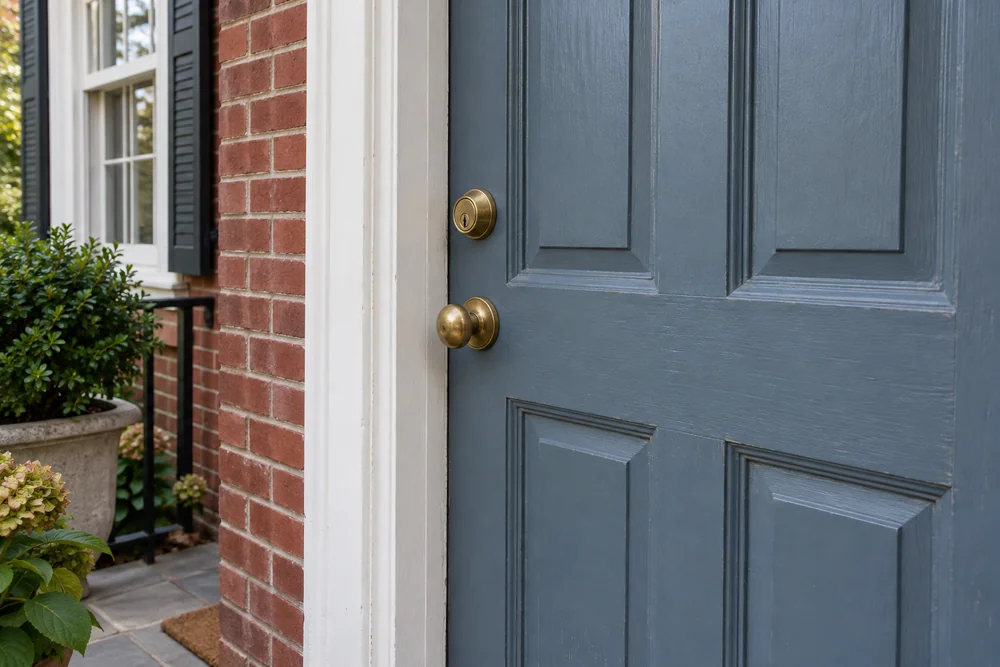
An older-looking entrance does not tell us exactly which mechanism is inside. A mortise lock, a separate deadbolt and a modern replacement can look different and require different parts. Share any visible maker information when asked. Repair options depend on the actual mechanism, its condition and suitable parts; antique restoration should not be assumed from the age of a Cambridge building.
One building, several responsibilities
At a mixed-use Central Square property, the shop entrance may be separate from the upstairs units. In a North Cambridge apartment building, a shared front door may be managed differently from your own unit lock. Identify the opening that is failing and who can approve changes to it. A problem with a common door should involve the responsible building contact.
Agree on the repair scope
Tell us whether the door can currently be secured and whether you still have working keys. Ask what an assessment and any proposed parts would cost. If replacement is recommended, ask what condition makes repair unsuitable and what hardware would fit. Confirm a change in scope before work continues.