
The opening determines the conversation
A shop around Central Square may have a customer door and a separate delivery or staff entrance. Say which one needs attention and whether it currently closes and secures. If the issue affects access during normal business use, explain how. Give the person arranging the work a clear description, rather than assuming every lock at the address is included.
Staff changes and key control
When a key is missing or a staff member leaves, list the doors that key operates. Ask whether rekeying suitable cylinders would meet the access goal. If keys are part of a master-key arrangement, involve the person who manages it before making changes. Cards, keypad users and software permissions need separate attention through the appropriate system contact.
A tenant suite is not the whole building
Kendall Square combines offices and research-related businesses with housing, shops and other uses. The tenant may control one lock while the landlord manages the main entrance. Identify that boundary before arranging work. A request concerning a lab, university or controlled facility should be coordinated with its facilities or security team; a nearby location is not evidence of LockReach affiliation or specialist system support.
Describe the hardware without dismantling it
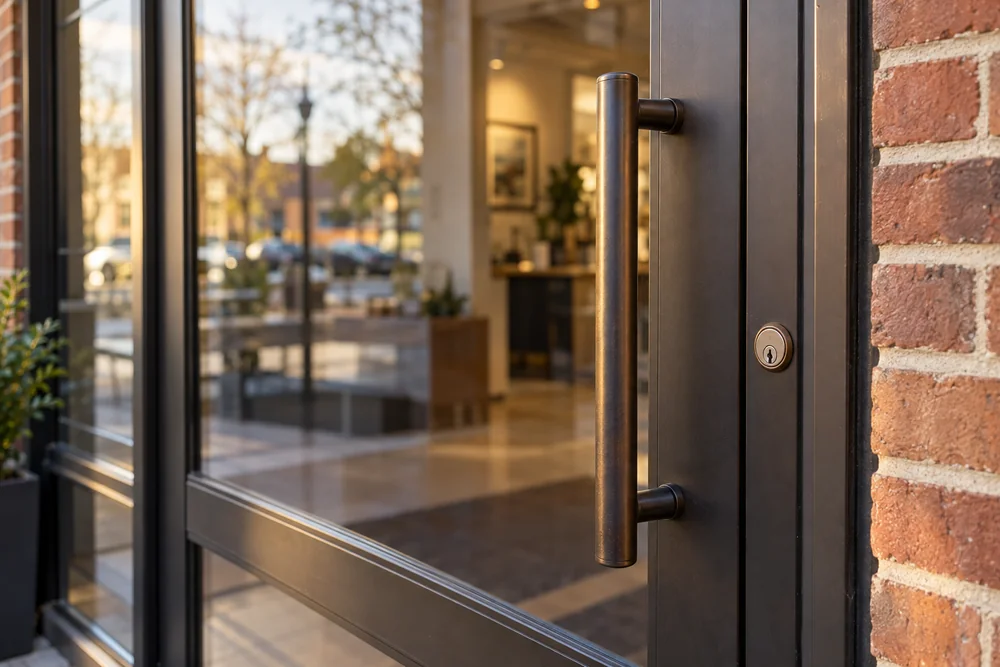
Mention a glass storefront, a separate cylinder, an electronic reader or visible damage if relevant. Describe whether the handle moves, the latch catches and the key turns. Any work on exit hardware or building-managed systems needs the appropriate assessment and authorization. Confirm that the specific task is available before scheduling.
Agree on disruption and approval
Have a named contact who can authorize work and explain access arrangements at the premises. Discuss the opening involved, the proposed scope, parts and estimate. If the assessment reveals additional work, get the revised scope agreed before proceeding. Keep the final key or access handover with the responsible manager.