
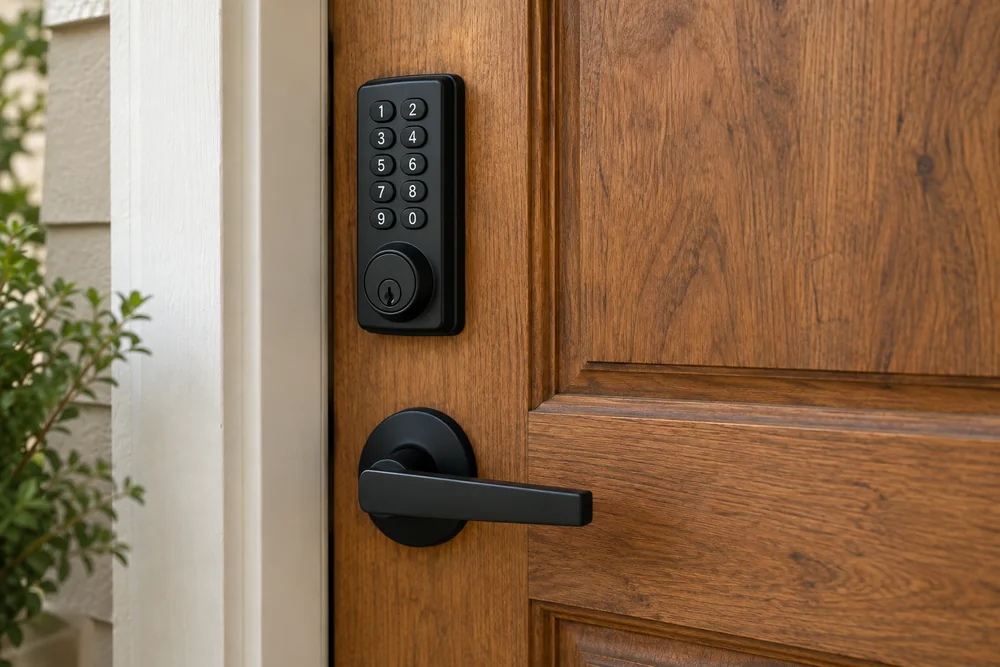
Replacement or a new opening?
Replacing a deadbolt in an existing opening is different from fitting a lock where none was installed before. Tell us whether the door already has the required hardware or holes. Include any other lock or handle nearby. This helps make the first estimate conversation about the actual work, rather than the price of a product alone.
Fit comes before finish
Door thickness, existing preparation and the distance between components can affect compatibility. The door also needs to close and latch properly. Have the chosen model details ready if you already own the lock. Follow the requirements for that model rather than assuming all deadbolts or keypads fit the same opening. A hardware change may involve separate door work that needs to be discussed.
A keypad changes more than the key
For a compatible electronic lock, think about who will manage codes, batteries and any app account. Discuss the backup method and how authorized users will regain access if a code or device fails. Changing a code and rekeying a mechanical backup cylinder are separate tasks. Do not assume an app-controlled product will work with a building access system.
Private door or shared entrance?
A keypad for your own house and hardware on a shared Cambridgeport entrance are different decisions. For a rental, condominium common area or managed office, speak with the responsible owner or manager first. Identify any building requirements before buying hardware. The fact that a lock is sold for residential use does not establish suitability for every door.
Check the result together
Include the number of locks, keys and authorized users in the scope discussion. At completion, ask to review normal operation, the agreed keys and any setup instructions relevant to the product. Confirm who controls the account and access codes. Keep the product information so future questions can refer to the actual model.